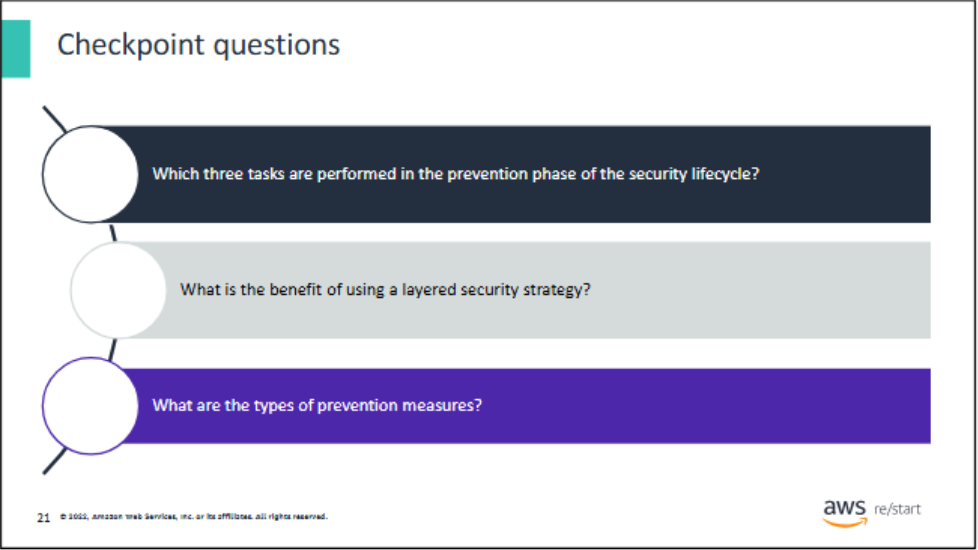
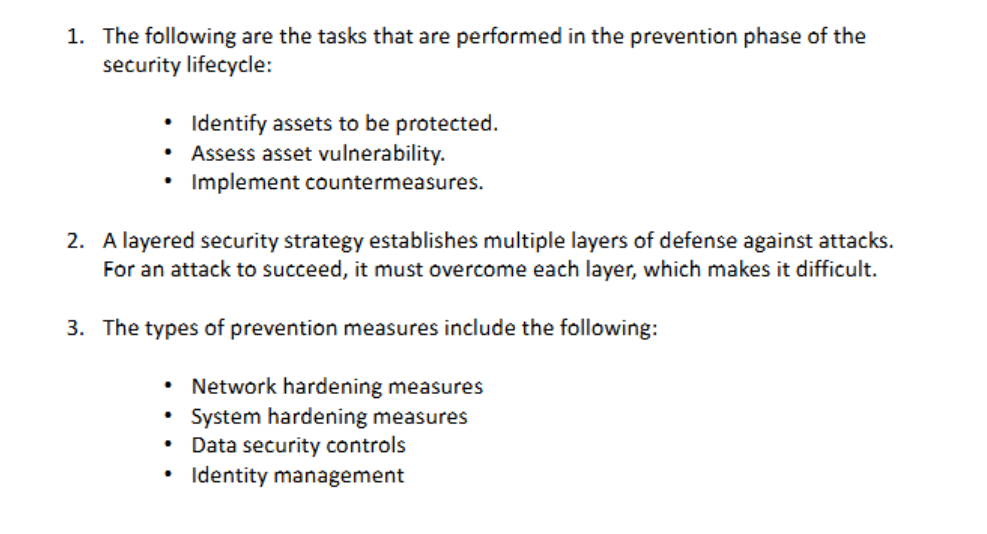
2 Prevention SLC
one short security - aws security - last min rev
Prevention in security Lifecycle
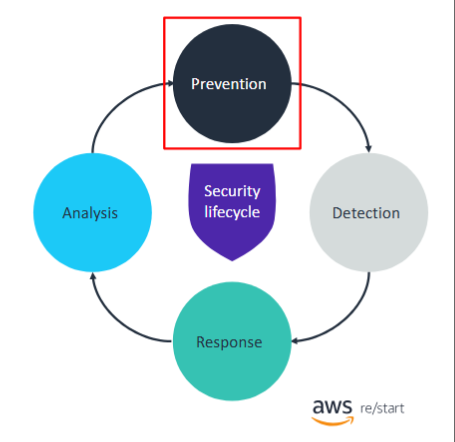
- Prevention
- Stopping the threat before it occus
- Identifying the assets to be protected
- Assessing assets vulnerability
- Implementing countermeasures
- Detection
- Identifying security events in real-time.
- Using monitoring tools effectively.
- Setting up alert mechanisms.
- Response
- Mitigating incidents promptly.
- Following incident response protocols.
- Coordinating response efforts.
- Analysis
- Investigating incidents thoroughly.
- Identifying root causes.
- Documenting lessons learned.
by default aws blocks every service the customer will decide what to open and what not to
What do you understand by resources in AWS?
Resources in AWS refer to virtual servers, databases, storage, and other components provisioned and managed within the AWS cloud infrastructure.
Prevention
1. Identifying assets
- network device
- servers
- application and services
we can identify this from the sources
- Network topology - network infrastructure layout
- Architecture diagram -how different components interct
- System Documentation- describing each assest purpose
AWS System Manager Inventory Function ss
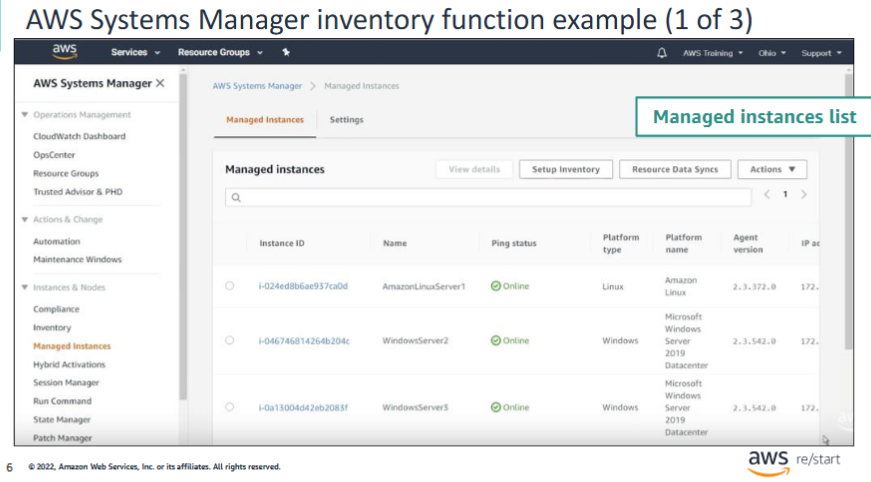
The AWS Systems Manager inventory function offers centralized management, detailed instance inventory, automation for tasks like software and patch management, enhanced security through up-to-date instance information, and operational insights for improved efficiency within AWS environments.
AWS service name for identity management ?
AWS Identity and Access Management (IAM). It provides secure access control to AWS services and resources for users and groups within your AWS account.
2. Assessing asset vulnerability
-
Types of Assessments:
- Network Assessment: Identify open ports and exposed devices.
- Host Assessment: Check running applications, services, and patch status.
- Application Assessment: Evaluate source code for security vulnerabilities.
- Data Assessment: Ensure data in transit and at rest are adequately protected.
-
Resources for Threat Identification:
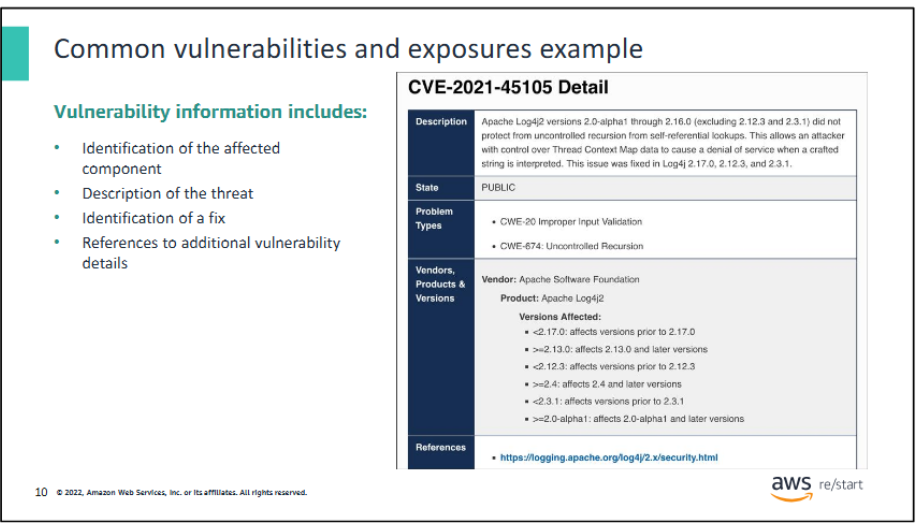
- Use reputable sources like the Common Vulnerabilities and Exposures (CVE) website.
- CVE lists publicly disclosed cybersecurity vulnerabilities.
- Helps in identifying and addressing security weaknesses using automated tools like scanners.
3. Prevention strategy
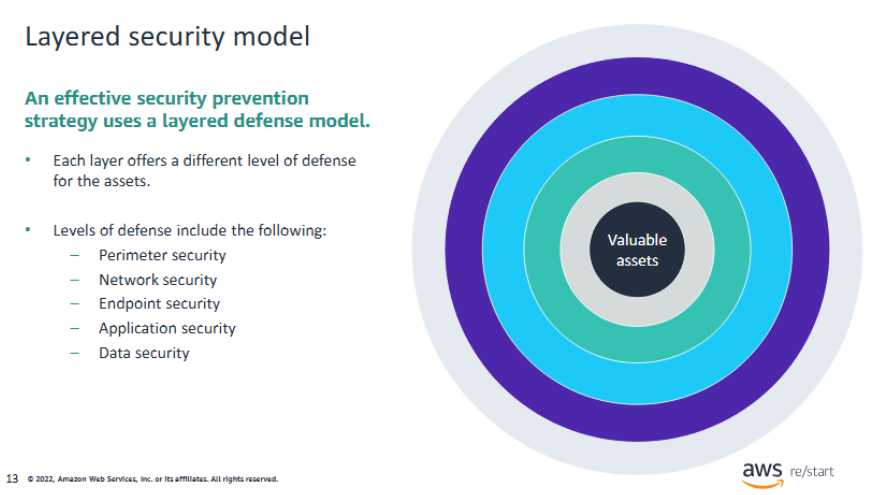
- Layered Security Model:
-
Uses multiple layers for defense.
-
Includes: Perimeter, Network, Endpoint, Application, Data security.
-
Protection Strategy:
- Secures valuable assets by requiring attackers to breach multiple layers.
- Examples: Firewalls for perimeter security, ACLs for network security, antivirus for endpoint security, specialized tools for application and data security. -
Castle Eample
-
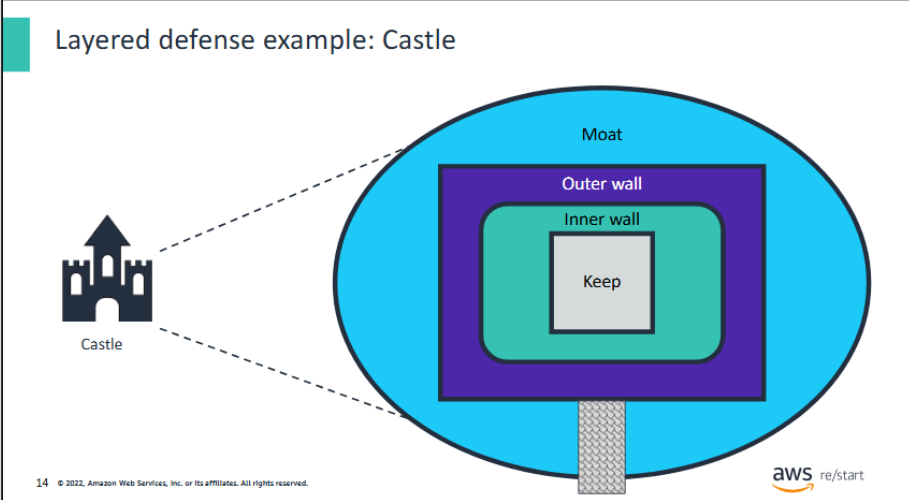
- Layers: Moat, Outer wall, Inner wall, Keep.
- Each layer must be breached for attackers to reach assets.
- Analogous to layered defenses in systems for increased security.
-
OSI Model Example:
- Layers: Physical, Data link, Network, Transport, Session, Presentation, Application.
- Security measures implemented at each layer:
- Physical: Securing network devices.
- Data link: Filtering based on MAC addresses.
- Network and transport: Using firewalls and ACLs.
- Session and presentation: Authentication and encryption.
- Application: Virus scanners and IDS.
- Protecting each layer enhances overall system security by making it harder to breach.
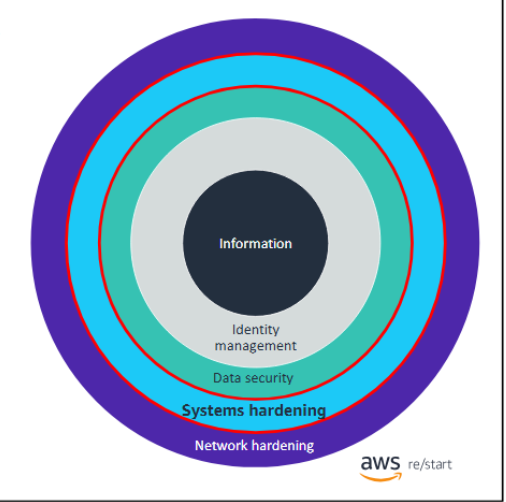
Types of prevention measures (Onion layers)
-
Network Hardening: Strengthen network security by blocking exploration protocols, closing unused ports, and maintaining an updated asset inventory. Use firewalls and segmentation for added protection.
-
Systems Hardening: Secure hosts by regularly applying OS patches, removing unnecessary applications, and monitoring configuration changes to prevent vulnerabilities.
-
Data Security: Protect data integrity and confidentiality through encryption for data in transit and at rest, digital certificates, and role-based access controls.
-
Identity Management: Control access with the principle of least privilege, enforce strong password policies, and implement authentication, authorization, and accounting (AAA) principles for auditing and security.